Last update January 12, 2006


現在地→ | 英語雑貨屋トップ | 英語用語集 | 英語独学室 | 英語資料室/ポポリンの観光英語―二条城 | 英語なんてタコ |
二条城概要 Outline of Nijo Castle
江戸幕府の初代将軍、徳川家康が、1603年(慶長8年)に作ったんだけど、自分が京都に来たときの「お泊り用御殿」として建てたらしいわよ。その後、3代将軍の家光が豊臣秀吉のお城だった伏見城の遺構を移したりして、完成したのが1626年(寛永3年)。
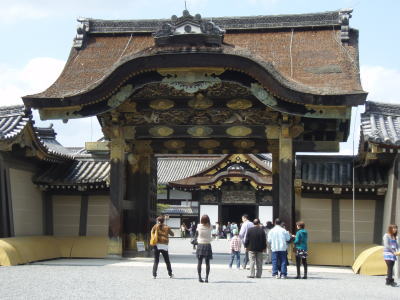
つまり、豊臣秀吉が残した永禄年間の遺構と、家康が建てた慶長年間の建築、そして家光がつくらせた絵画・彫刻がミックスされてんのね。桃山時代様式の全貌が表されてるらしいわ。すごいわね。

その後、江戸時代最後の将軍である慶喜が、1867年に大政奉還ってのをやって明治時代になるんだけど、このときに、朝廷にあげちゃったらしいわ。もったいないわね。

1884年(明治17年)には「離宮」になって、1939年(昭和14年)に京都市のものになったということなのよ。え?これを英語でどういうかって?右側に書いてあるじゃないの、ちゃんと見なさいよ、いやあねえ〜。


The early building of Nijo Castle was built in 1603 by Tokugawa Ieyasu, the first shogun of Tokugawa reign, as his villa in Kyoto. The third shogun Iemitsu expanded it by using the structures moved from Fushimi Castle, once the property of Toyotomi Hideyoshi. The construction by Iemitsu finished in 1626.

With the remains of Fushimi Castle incorporated, Nijo Castle serves as a panoramic showcase of glamorous styles of the Momoyama period (1573 - 1614). Also, the castle represents a sophisticated blend of tastes and styles of the three rules of the time: Hideyoshi, Ieyasu, and Iemitsu, who ordered to created the decoration of paintings and sculptures in the castle.

Tokugawa Yoshinobu, the fifteenth and the last shogun of the Tokugawa returned sovereignty to the emperor in 1867, and Nijo Castle was offered to the imperial family.

The castle changed the name to Nijo Detached Palace in 1884. In 1939 the properties were donated to Kyoto city and renamed Nijo Castle. It has been opened to the public since then.


徳川家康っていえば、「泣かぬなら泣くまで待とう、ホトトギス」って言った人なの。それに対して、織田信長は、「泣かぬなら殺してしまえ、ホトトギス」、豊臣秀吉が「泣かぬなら泣かしてみせよう、ホトトギス」。有名な話よ。え?知らないの?アンタ、ちょっと勉強不足よ〜。でも、ホトトギスもとんだ災難ねえ。これで織田信長に殺されたりしたらたまんないわね。アタシなんかカラスとハトのハーフでよかったわよ、ほんとに。

番所 Guardhouse
入ってすぐのところに「番所」ってのがあるのよね。まあ、言ってみれば、今の「守衛さん」みたいなもんよ。「二条在番」とか呼ばれて、ここの藩士たちは江戸から派遣されていたんだって。こういう藩士たちが50人1組で2組いたらしいわよ。

1組が最初の年に担当して、次の年の4月になると、もう1組と交替したらしいのね。50人っていうから、すごいわねえ。お城のあちこちにこんな「詰め所」があったらしいから、ま、それくらい必要だったかもしれないわね。この門番所は正面十間、つまり6.06mの細長い建物で、前のほうの畳のところに門番が座っていたってわけね。

それでね、こういう「番所」みたいな建物で、現存してるのはすごくめずらしいんだって。だから、これは貴重な資料らしいわよ。へえ〜。


Passing through the Eastern Main Gate (Higashi Ote Mon), there is a long (6.06 m) and narrow building with some personnel (mannequins) sitting and standing upright. Called Bansho in Japanese, the building functioned as a guardhouse where stationed guard staff regulated and welcomed the visitors to the castle.

The guards were called Nijo Zaiban or "Nijo Guards," and in total, there were hundred of them, who were split into two groups each of which consisted of 50. The groups worked on a yearly shift: one group replacing another every April. All guards were dispatched from Edo (presently Tokyo).

There were many such guard stations throughout the castle, but the one near the Eastern Main Gate is only one remaining today. It is listed as an Important Cultural Property for its rarity.


二条城のわかりやすいところは、人形が立っていたりするところなのね。で、ここの番所にも、前に座っているのと後ろに立っているのがいるんだけどさ、これがまた、みんないい男なのよ。人形にしとくのは惜しいくらいよ。後ろに立ってる袴はいてるのは「上役」、つまり上司らしいんだけどさ、とくに前に座ってる男がいいじゃない?キャー、カワイイ〜。アタシ好みなのよね…

二の丸御殿   国宝 
Ninomaru Palace   National Treasure 
じゃあ、次は「二の丸御殿」よ〜。桃山時代の武家風書院づくりの代表的なものらしいわよ。「二の丸」っていうのはさ、天守閣とか殿さまとかが住んでいる御殿が「本丸」っていうのに対して、その外側になるのが「二の丸」なんだって。でさ、「日の丸」弁当に対して「二の丸」弁当ってのは、梅干が2つ入っているんだって〜っ(ウソよ、冗談、冗談、へへ…)。

でさ、これ全部合わせた面積が3,300平方メートルなんだって。すごいわねえ。部屋の数が33、畳が800畳あまりだって。ああ… もうだめ、気が遠くなりそう。

でもね、アンタ、それだけで驚いてたらまだ早いわよ。各部屋の装飾がまたすごいんだから。襖に書かれた絵は狩野派の手によるもので、部屋の目的に合わせて描かれているらしいわ。虎の部屋なんかもあるのよ。怖い虎の絵なんか見せながら、待っているお侍たちを威嚇してたのかしらねえ(?)

欄間彫刻もすごいわよ。透かし彫りだったりするのよね。豪華絢爛よ。ほんとに芸コマっていうか、「いい仕事」してるのよ、釘を隠すために花熨斗(はなのし)形の細工なんかもあんのよ。


Ninomaru (outer fortress) Palace features a typical warrior Shoin style in the Momoyama period. The Shoin style takes its origin from a Buddhist abbot's house structure.

Measuring 3300 square meters, the palace proper consists of five buildings units: the Entrance, Waiting Area, Reception, Inner Audience Chamber and Shogun's Quarters. In total, the palace has 33 rooms or 800 tatami mats.

Japanese cypress wood, considered as building material of finest quality in Japan, is abundantly used for almost every part of the buildings. The paintings on the sliding doors (fusuma doors) and walls of each room are masterpieces by great contemporary artists of the famous Kano School. The rooms are decorated with a sophisticated set of Shoin style decoration items including beautifully-carved transoms, chic tokonoma alcoves, and decorative doors.

The palace buildings are listed as Important Cultural Properties by the Japanese Government.


で、この二の丸御殿の全体の見取り図なんか作ってみたわよ。図をクチバシでつついてみてくれる?詳しい説明が出るのよ。え?アンタ、クチバシないの?あら、やだ。しようが無いわねえ。じゃあ、クリックでもいいわよ。


二の丸庭園   特別名勝 
Ninomaru Garden   Special Scenery 
次は、二の丸庭園よ〜。なんでも「池泉回遊式庭園」とかいう造園術らしいわよ、これ。

江戸時代の大名屋敷などでさかんに使われたスタイルでさ、真ん中に池をもってきて、その周りを大名とかが優雅に散歩したりしたらしいわ。仏教世界を表現しているって説もあるわよ。池を囲むようにいろんな形の石だとかを配置すんのね。それで、池の中央に「蓬莱(ほうらい)島」(なんか、豚まん食べたくなったわ)、その左右に鶴亀の島を配置するんだって。当時の有名な庭園デザイナーで茶人でもあった、小堀遠州とかいう有名な先生の作らしいわよ。


Ninomaru Garden is built using the "Chisen-Kaiyushiki-Teien" (Round-the-Pond Garden) style, popular Japanese garden style in Edo period. The style represents a cosmic world of Buddhism with the pond at the center surrounded by various stones both in size and color as well as trees. Viewers of the garden stroll around the pond to enjoy natural beauty of each season.

In the center of the pond are three islands; Horai-jima (Island of Eternal Happiness), Tsuru-jima (Crane Island), and Kame-jima (Turtle Island).

The design of the garden is attributed to the reknown tea master and garden architect Kobori Enshu.


きれいね〜。池の水もきれいよ〜。なんか、おいしそうなもの泳いでいないかしら?どれどれ…


本丸   重要文化財 
Honmaru Building   Important Cultural Property 
本丸は1626年(寛永3年)に、3代将軍家光が増築したのよ。昔は、お城ならではの立派な天守閣があったらしいけど、1750年(寛延3年)に雷が落ちて焼けちゃったらしいの。怖いわね、雷さまって。城内に高くそびえ壮麗を誇っていた5層の天守閣っていうから、あんまり目立ちすぎたのかもね〜。

ところが、なんと、災難はそれだけじゃなかったのよ。1788年(天明8年)には大火事が起きてさ、本丸内の御殿舎も類焼で焼けちゃったってわけ。怖いわねえ、火事って。火の用心忘れちゃあダメよ、アンタ。だから、今建っている建物は、もともと京都御所にあった旧桂宮御殿らしいわよ。それを1893年〜94年(明治26〜27)、ここに移築したってわけ。

で、今の建物だけど、1847年(弘化4年)に建てられたということよ。宮御殿の遺構として完全な形で残っているのはこれだけなんだって。もちろん、重要文化財ってわけね。

本丸御殿の南側にある庭園は、明治時代に造られたもので、比較的新しいのね。天守閣跡っていうのが、この庭園の南西隅にあるんだけどね、なんかちょっと寂しいわよね〜。お城なんだから、やっぱり「天守閣」は見たいわよね。アタシもトリだから高いところ好きだし、何でもいいから復元すればいいのにね。物足りないわよ(ガーガー)。


Unfortunately, the original Honmaru Palace doesn't exist today. The current building used to be the palace for Prince Katsura, an imperial member, initially built within the Kyoto Imperial Palace premises and moved to the present location to serve as Honmaru in 1893. Equally valuable and prestigious as the original palace, the current building is also placed on the Important Cultural Property list. The palace is open to the public only for special occasions.

Once located in the Honmaru area was a magnificent five-tier donjon, which was struck by lightning to be burned down in 1750. In 1788, a big fire broke out in the neighbor, consuming all the remaining palace structures.

To the south of the palace there is a garden created in the Meiji Period (1868 - 1912), and to the southwest is the remain of the five-tier donjon.

The burned original palace was built by the third shogun Iemitsu in 1626, and used as the residence for him and his retainers. The Momoyama style structures transferred from Fushimi Castle were incorporated in the original building.


あー、文句ばっかり言ってたら、お腹空いてきたわよ。アンタ、だいじょうぶ?おやつの時間にしてもいいわよ。チョコかなんか持って来たでしょ。アタシは失礼して、「ぱくり」。ん?なに見てんのよ。え?だいじょうぶだってば、一匹だけじゃない。こんなに小さい画像じゃ、なにやってるかわかんないわよ。アンタもどう?


清流園
Seiryu-en Garden
お腹いっぱいになったところで、次は清流園っていうお庭よ〜。江戸初期のリッチなビジネスマンだった角倉了以さんのお屋敷から、建物の一部と庭石約800個をもらってきて、それを二条城バージョンにして、それらしく造ったのがこの庭ね。雄大・明朗・風雅がモチーフよ。

現代になって、さらに銘石300個を全国から集めてきて、お茶室を新築して1965年(昭和40年)に完成。池泉回遊式の和風庭園の部分と、芝生を主体にした洋風庭園部分からなり、面積約16,500平方メートルだって。

園内には香雲亭、茶室和楽庵があり、市民大茶会とか、国レベルの大事なお客さんとかを案内したときの接待場所にも利用されてるらしいわ。トム・クルーズも来るかしら?
The garden complex containing the two tea houses; Kaun-tei (Fragrant-Clouds House) and Waraku-an (Harmony-Comfort Hut) are mainly used for tea ceremonies held by the city and reception events for government guests.

800 out of the 1,100 stones decorating the area have been moved from the nearby residence of Ryoi Suminokura, a rich merchant in the beginning of the Edo Period (1603 - 1867). The remaining 300 stones were collected from throughout Japan. Also, one of the tea houses was originally a part of the above merchant's residence.

The entire garden complex, designed to represent "maginificence, brightness and elegance," completed in 1965. Within its 16,500 square-meter area, there are a traditional Round-the-Pond garden and a western lawn field.